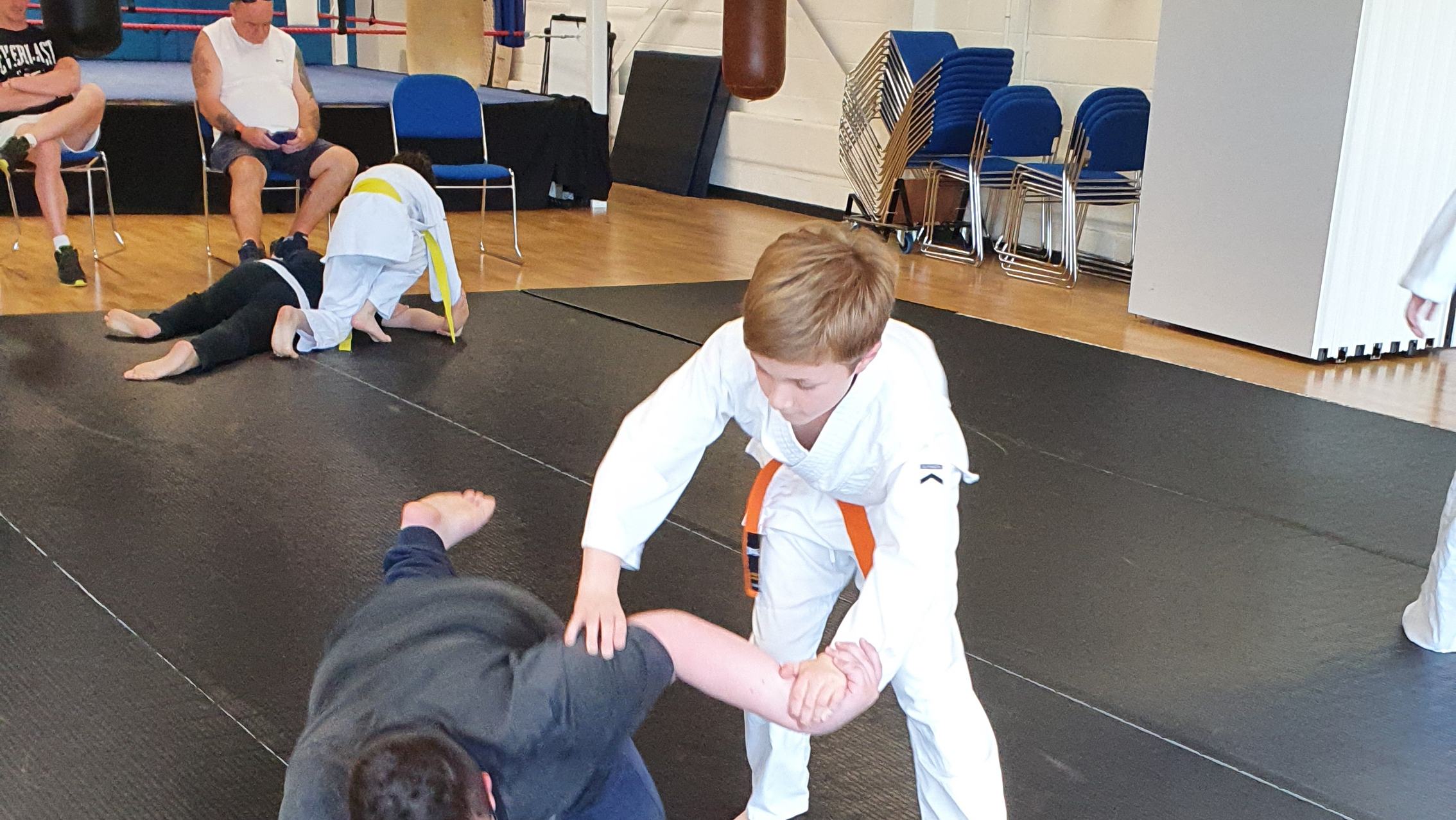
Not how to win a fight — how to stand in a way that means the fight never starts.
Parents sometimes bring their children to martial arts because they are worried about bullying.
The question underneath is understandable:
“If somebody picks on my child, will they be able to defend themselves?”
It's an important question.
But after many years of teaching children, we think there is a bigger one:
Can we help a child become less afraid, more confident and better able to deal with confrontation before it becomes a fight?
Because bullying is rarely just a fighting problem.
And learning how to throw somebody is not, by itself, a solution.
Bullying Happens Long Before the First Push
Bullying can be physical, but it can also be verbal, social or online.
It may be the child who repeatedly calls someone names. The group that deliberately excludes them. The threat in the playground. The person who discovers that making another child uncomfortable gets a reaction — and keeps doing it.
No martial art can promise to make those things disappear.
What training can do is help change some of the tools a child has when dealing with difficult situations.
At Hizashikan, that starts with something surprisingly simple:
how they carry themselves.
Confidence Can Be Visible
Watch children when they first arrive at a dojo and you quickly discover that confidence has a physical language.
Where do they look?
How loudly do they speak?
How do they react when they make a mistake?
What happens when somebody enters their space?
Some children naturally stand tall and speak clearly. Others make themselves smaller.
Neither is a judgement on the child. They are simply starting from different places.
Aikido gives them a safe environment in which to practise being a little more certain of themselves.
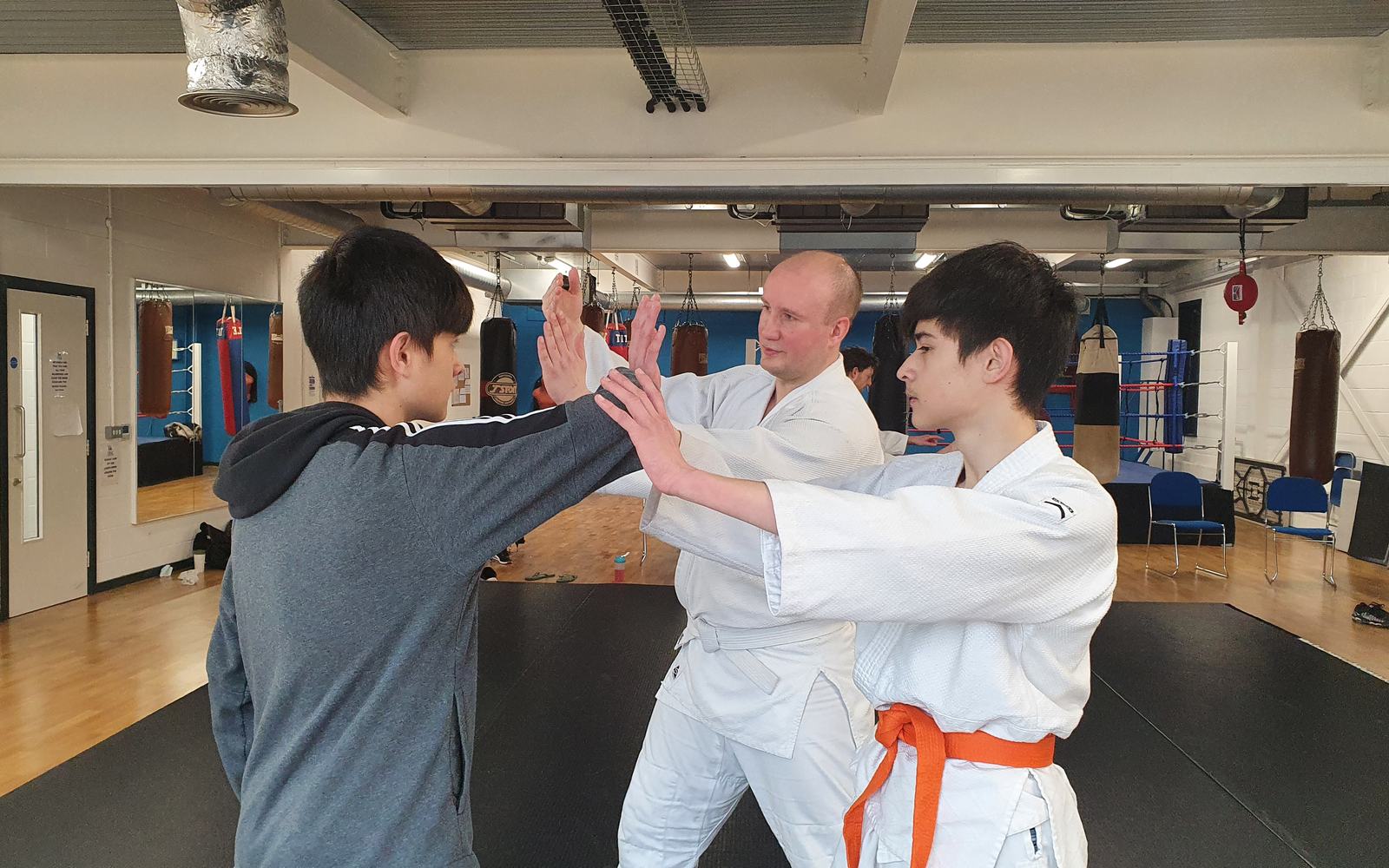
They learn to stand with balance. They learn to move deliberately. They work with different training partners. They speak to instructors.
They practise something difficult, get it wrong, try again and gradually realise:
I can do this.
That confidence doesn't remain neatly folded inside the dojo when they leave.
Learning Not to Panic
Aikido training places children in controlled situations that initially feel unfamiliar.
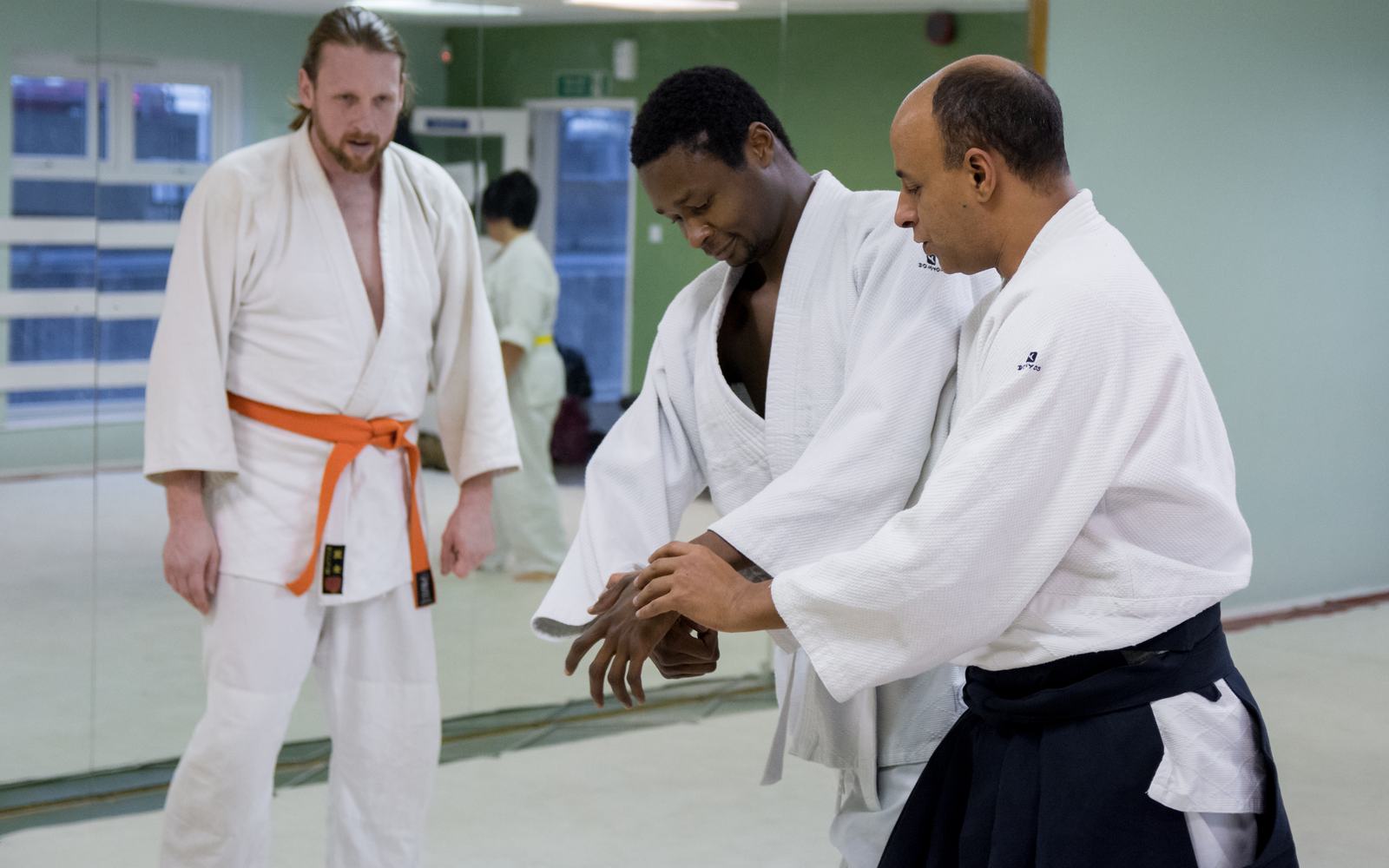
Someone holds their wrist.
A partner moves towards them.
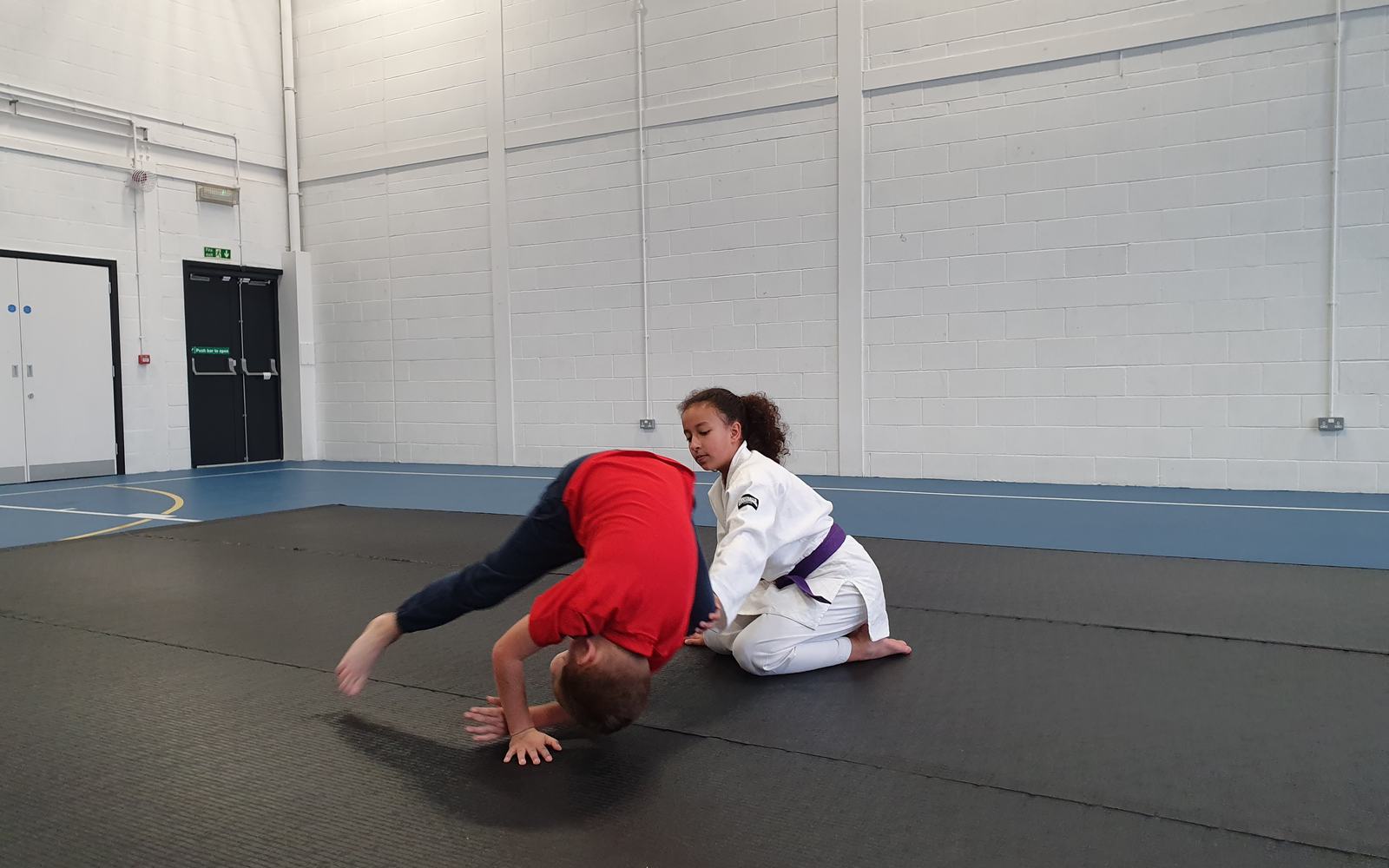
They lose their balance.
They fall.
Then we practise what to do.
Move your feet. Protect yourself. Breathe. Don't stiffen unnecessarily. Get back up. Try again.
Over time, something that once produced uncertainty becomes familiar.
This doesn't mean a child will never become frightened. Fear is a perfectly normal response to threatening situations.
The lesson is that feeling pressure doesn't mean losing the ability to act.
That is useful far beyond martial arts.
Strength Without Having to Prove It
There is an interesting paradox in martial arts.
As children become more capable, they often have less need to demonstrate that capability.
On the mat, there is always somebody stronger, faster, older, younger, more experienced or simply better at a particular technique.
You learn very quickly that showing off isn't particularly impressive.
You also learn that strength comes with responsibility.
A technique practised safely with a training partner is not something to be casually demonstrated on another child in the playground.
At Hizashikan, learning martial arts should never mean learning to look for opportunities to use them.
Quite the opposite.
The more you know, the more responsibility you have for what you do with it.
Walking Away Is Not Losing
Children can sometimes absorb the idea that refusing a fight means being frightened.
Martial arts can help challenge that.
There is nothing particularly brave about allowing somebody else to decide when you must fight.
Sometimes the strongest decision is to disengage.
Move away. Use your voice. Find a teacher. Stay with friends. Tell a parent. Ask for help.
A child should never be made to feel that learning self-defence means they are now responsible for solving bullying alone.
Adults still have responsibilities.
Schools still have responsibilities.
Parents still have responsibilities.
Martial arts simply gives the child more tools, not all the responsibility.
And Yes, We Teach Self-Defence
It would be dishonest to talk about children's martial arts and pretend the physical side doesn't matter.
Aikido is a martial art.
The Aikido taught at Hizashikan comes from a background that has always included both traditional practice and practical self-defence.
Children learn movement, balance, distance, falling safely, escaping from situations and applying techniques in a controlled environment.
As their ability develops, so does their understanding of when physical action is — and is not — appropriate.
The aim isn't to create children who believe every confrontation requires a technique.
The aim is to give them choices.
If they can leave, leave.
If they can get help, get help.
If they can prevent a situation escalating, better still.
And if they genuinely need to protect themselves, training means they are not encountering physical pressure for the very first time.
Respect Does Not Mean Submission
Aikido places a great deal of emphasis on respect.
We bow. We listen. We take turns. We look after our training partners.
But respect should never be confused with accepting mistreatment.
A child can be respectful and still say no.
They can be kind without allowing someone to repeatedly intimidate them.
They can avoid unnecessary confrontation without becoming passive.
Learning the difference between aggression and assertiveness is one of the most useful things a child can carry away from martial arts.
The Lesson We Hope Goes Home With Them
Of course we want children to improve their Aikido.
We enjoy seeing a technique finally work. We enjoy watching their ukemi improve, seeing them earn grades and watching the nervous beginner become the experienced student helping somebody new.
But those aren't the only changes that matter.
Sometimes the important change happens outside the dojo.
A child speaks a little more clearly.
They stop being frightened of making mistakes.
They make friends.
They become comfortable working with different people.
They discover that being strong doesn't require being aggressive.
And perhaps they stand a little taller than they used to.
That's what martial arts can contribute to the problem of bullying.
Not a promise that a child will never encounter it.
Not a guarantee that they will “win” every confrontation.
Something much more useful:
confidence without aggression, respect without submission, and the judgement to know the difference.
The best outcome of self-defence training isn't a child who knows how to win a fight.
It's a child who has fewer reasons to enter one — and more options if they cannot avoid it.
Children's Aikido in Coventry
Hizashikan Aikido teaches children in a friendly, non-competitive environment in Coventry.
Beginners are welcome, and children do not need previous martial arts experience.
Parents are welcome to come along, ask questions and see how we train.