Students sometimes tell me they cannot come to training because they're too busy. There is something at work they need to sort out, a problem at home, a decision they need to make, or simply too many things going around in their head.
My response is often:
“Hmm… busy looking at the same problem from the same angle?”
I say it with a smile, but there is a serious point behind it.
When something is important, our instinct is often to give it more attention. We think about it on the way home, while eating dinner, while sitting on the sofa and sometimes while we're supposed to be sleeping. Surely, if we keep working at it for long enough, we'll eventually find the answer.
Sometimes we do.
And sometimes we've stopped solving the problem altogether. We're simply looking at the same thing, from the same position, hoping another hour of staring at it will somehow produce something different.
That might be exactly the time to come to training.
Give the Problem Two Hours Without You
I'm not suggesting that Aikido will solve your problems, and I'm certainly not suggesting that you ignore your responsibilities.
I'm suggesting something much simpler.
Put the problem down for a couple of hours.
Come to the dojo, step onto the mat and give your attention to something completely different. Afterwards, go back to whatever was occupying your mind and see whether it looks the same.
Perhaps it will. But perhaps, with a little distance, you'll notice something you couldn't see before.
And if no great solution presents itself, there's always Plan B: you'll probably be tired enough after training to go home and sleep.
Either way, it's a win. 😂
The Dojo Gives Your Brain Another Job
Most adults don't arrive at Aikido with wonderfully peaceful minds. We arrive carrying whatever happened during the day with us.
There are emails we haven't answered, bills that need paying, deadlines approaching, family matters, work problems and conversations we are still having in our heads long after the other person has probably forgotten them.
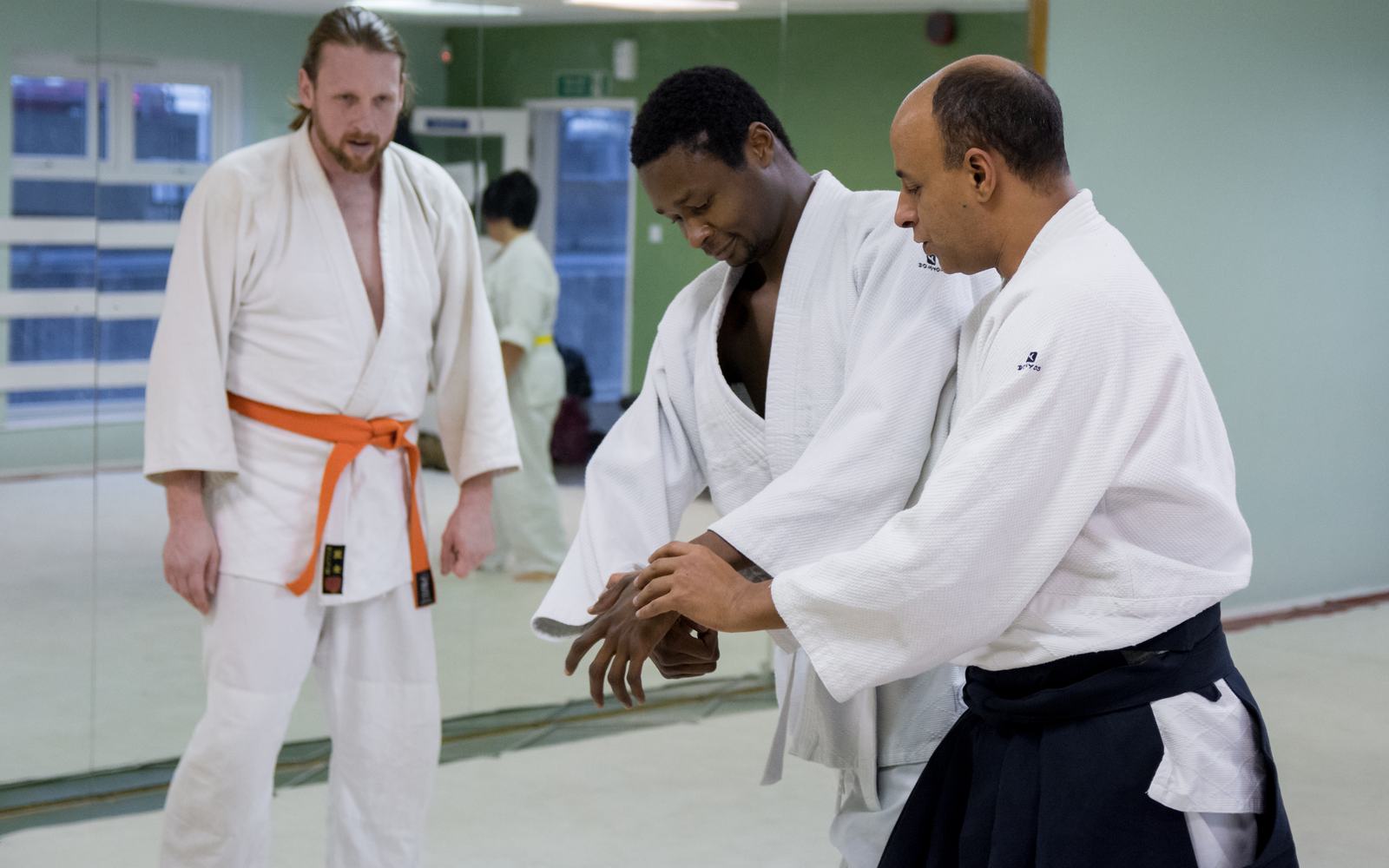
Then class begins and somebody grabs your wrist.
Suddenly your brain has another job.
You're trying to remember where your feet should be, which direction you're supposed to move, what the instructor demonstrated thirty seconds ago and why your partner seems to have understood something that has apparently escaped you completely.
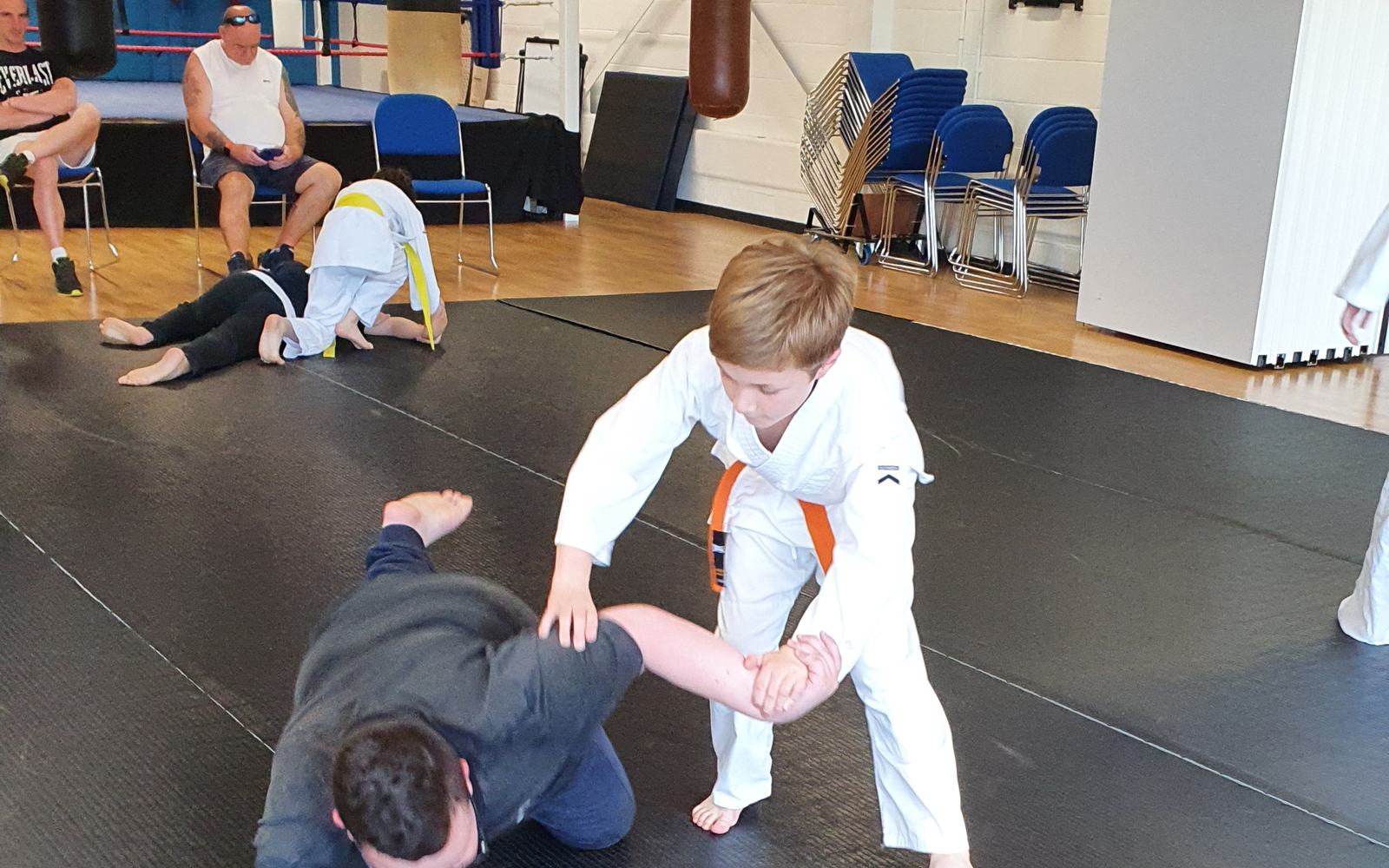
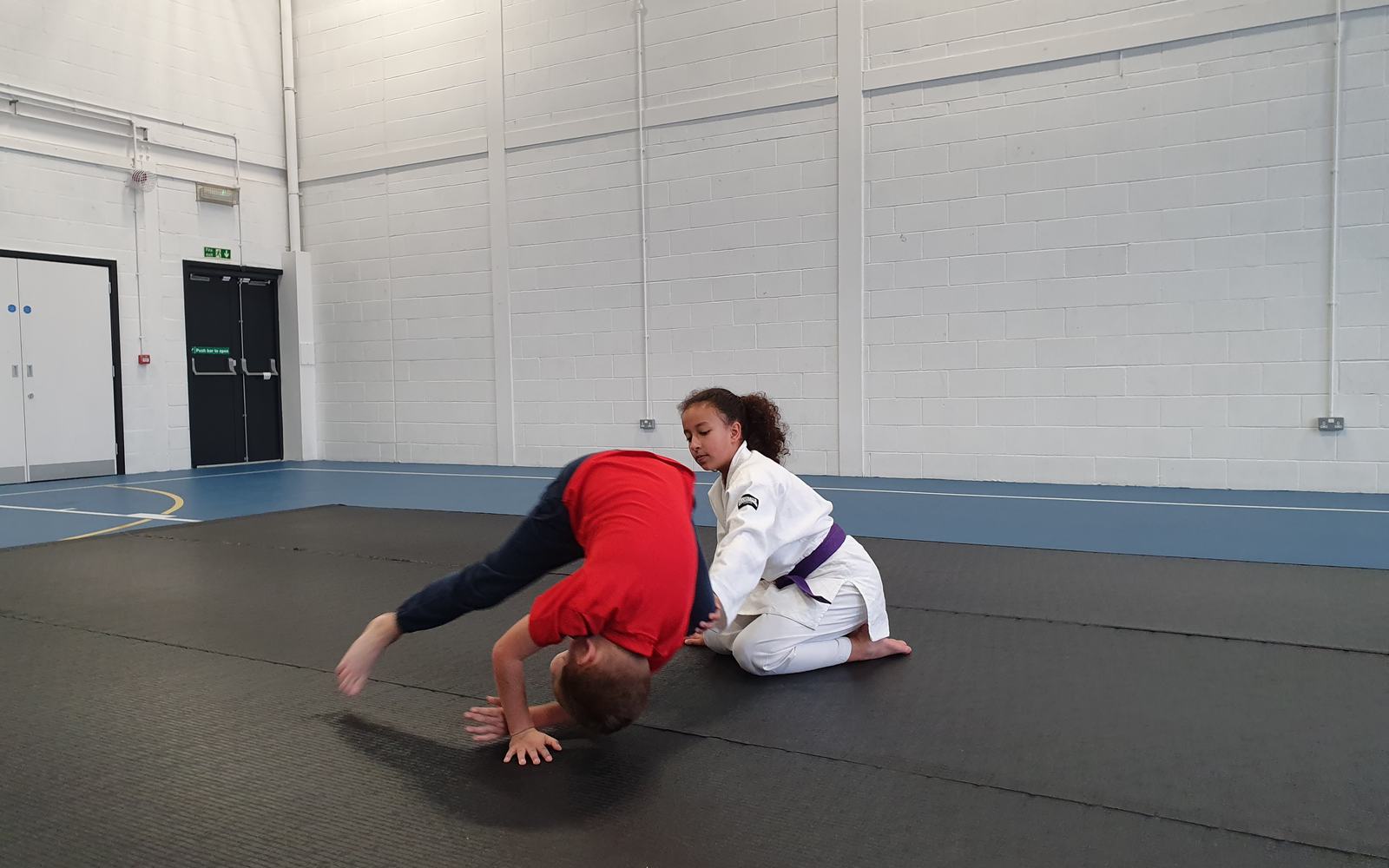
Then it's your turn to be uke. Now you need to pay attention to your balance, your partner, the technique and your ukemi.
Twenty minutes later, you realise something rather interesting.
You haven't thought about that email once.
Aikido Makes It Difficult to Be Somewhere Else
We spend a surprising amount of our lives doing one thing while thinking about another.
We eat while looking at our phones. We watch television while answering messages. We sit with our families while mentally finishing something from work. Even when we finally stop moving, our minds often continue at full speed.
Training with another person changes that.
Your partner is standing in front of you and deserves your attention. You need to feel where their balance is, understand where yours is, remember the movement you've just been shown and respond to what is actually happening rather than what you expected to happen.
If your mind wanders too far, the technique usually provides fairly quick feedback.
For a while, the past and the future become less interesting than the person standing in front of you.
You are simply training.
Sometimes You Need a Different Angle
There is something in Aikido itself that reflects this idea.
When force is coming towards you, the answer is not always to stand in front of it and push harder. We learn to move, change our position and find another angle.
Problems outside the dojo can be surprisingly similar.
When we have been thinking about something for too long, we can become attached not only to the problem but to the particular way we have been trying to solve it. We keep pushing from the same direction because that is where we started.
Stepping away interrupts that pattern.
It doesn't guarantee an answer. Sometimes a difficult problem remains a difficult problem.
But when you return to it after spending a couple of hours concentrating on movement, timing, balance and another human being, you are returning with some distance from the thoughts you were repeating earlier.
The problem may not have changed.
Your angle might have.
There Is Freedom in Getting Something Wrong
Adult life doesn't always give us much room to make mistakes.
At work, mistakes may cost money. At home, other people depend on us. Decisions have consequences, and there are plenty of situations where we are expected to know what we're doing even when we're not entirely sure ourselves.
Then you come to Aikido and put the wrong foot forward.
Nobody dies.
You try again.
You forget half the technique. Your partner helps you. You start again, get slightly further, discover you've now forgotten the other half and probably laugh about it.
This is simply training.
There is something refreshing about spending time somewhere that mistakes don't need to become failures. They're information. Something didn't work, so you adjust and try again.
Even experienced practitioners experience this. A familiar technique behaves differently with another partner. Something that worked beautifully on one side suddenly seems to have disappeared from your memory when you change hands.
You don't need to take the mistake home with you.
You just practise.
And Then Somebody Makes You Laugh
A dojo should take its martial art seriously.
That doesn't mean everyone inside it has to take themselves seriously.
Aikido has a wonderful ability to produce moments where what your brain intended and what your body actually did appear to have been negotiated by two completely separate departments.
Left becomes right. Feet become mysteriously numerous. An elegant movement demonstrated by the instructor becomes something entirely different when you attempt it.
Your partner looks at you.
You look at your partner.
And both of you know that whatever just happened definitely wasn't the technique.
So you laugh and try again.
For someone who walked through the door carrying a difficult day, those moments matter.
A Different Kind of Tired
There is also a difference between being physically tired after doing something and being mentally exhausted from thinking about something.
After training, your body knows it has worked. You've spent the class moving, concentrating, taking ukemi, practising techniques and getting back up again.
There can be something satisfying about that tiredness.
Perhaps you leave the dojo and the answer to your problem suddenly seems obvious.
Perhaps an idea appears while you're driving home.
Perhaps absolutely nothing appears and the problem remains stubbornly unsolved.
That's all right too.
Go home.
Have something to eat.
Get some sleep.
Tomorrow, you can look at it again.
The Problem Will Wait
Aikido isn't therapy, and we don't pretend that a couple of hours on the mat can remove the pressures of life.
What training can offer is something much more ordinary, and perhaps more useful: a period of time when those pressures don't have to occupy every corner of your attention.
The problem can wait outside.
For the duration of the class, there is another person in front of you, a technique to understand, balance to find, ukemi to take and probably at least one moment when your feet decide they have their own interpretation of what the instructor demonstrated.
Then the class finishes.
You bow off the mat and return to your life.
Whatever was waiting for you may still be there, but you've had some distance from it. You can pick it up again without necessarily picking up exactly the same train of thought.
So when a student tells me:
“Sensei, I've got too much on my mind. I'm too busy to train.”
They shouldn't be surprised when I respond:
“Hmm… busy looking at the same problem from the same angle?”
Come and train.
Give yourself a couple of hours away from it, then go back and have another look.
Maybe the solution will present itself.
And if it doesn't, perhaps you'll sleep well enough to tackle it tomorrow.
Either way, it's a win.
Adult Aikido in Coventry
You don't need to arrive at Hizashikan feeling relaxed, fit, flexible or particularly coordinated. You certainly don't need to leave the day's problems neatly organised at the door.
Just turn up and train.
For a couple of hours, we'll give your mind something else to do.